A Word from the Dean
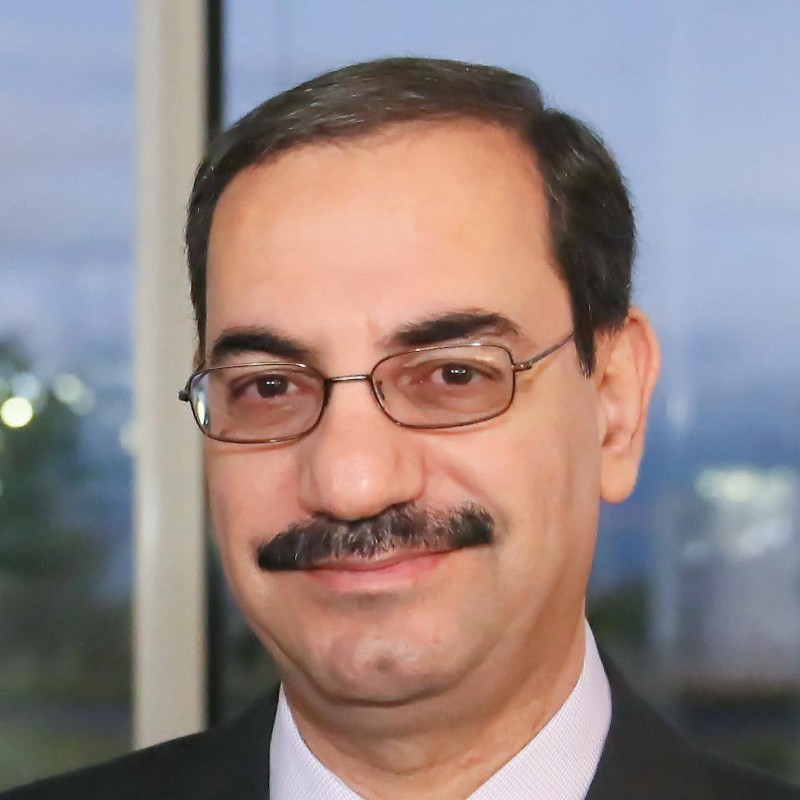
Ali H. Sayed
Dean of the School of Engineering
I am happy to share with you the 2021 annual report for the School of Engineering (STI) at EPFL.
Our students, faculty, and staff members have all risen to the challenge marvellously, and have helped bring back our campus to its normal state, brimming with activities and optimism for the future. We are hopeful that the difficulties arising from the pandemic will fade away gracefully, with minimal disruption to our normal operations.
EPFL and its School of Engineering have withstood the interruptions to campus life with determination and thoughtful planning.
The mission of the School of Engineering at EPFL is to educate well-rounded engineering students in preparation for careers in research or industry; to advance and lead in research discoveries in engineering; to support and contribute to technology transfer; to innovate in engineering education; and to contribute engineering solutions to societal challenges. The School maintains a vibrant and dynamic environment that embraces students from their first steps in higher education and guides them through an engaging curriculum. Students are provided with many opportunities to get involved in exciting projects and competitions, both on the national and international levels, such as the Swiss Solar Boat project, the EPFL racing team, the Rocket team, and others. The School of Engineering leads in innovation and technology transfer, accounting for close to 50% of all start-ups created at EPFL and close to 50% of all patent applications as well.
Our school is one of the finest engineering institutions of higher education in Europe and the World, and 2021 has continued to be a productive year. Several initiatives have been launched or are taking place across EPFL with direct contribution from the faculty members in the School of Engineering.
In collaboration with the Schools of Basic Sciences (SB) and Computer and Communication Sciences (IC), we have launched a new Center on Quantum Science and Engineering. It coalesces strengths from the three schools to tackle some of the most fundamental and promising technologies of the future, with the potential to revolutionize computing paradigms. In another collaboration with IC and the School of Life Sciences (SV), we have also launched the new Institute on NeuroX, which is devoted to advancing the state-of-the art in neuro-technologies for the treatment of neural disorders. The institute blends the fields of basic neuroscience, engineering, and computer science to create effective translational solutions. These efforts complement other recent initiatives related to the creation of the EPFL Center on Intelligent Systems and the EPFL Center for Imaging.
Besides promoting various opportunities of this type to explore important evolving research directions, we are also developing new curricular pathways to train our students in domains related to quantum science and engineering, neurotechnoligies, imaging modalities, and the design of intelligent systems and robotics.
I welcome you to learn more about our programs and these ongoing efforts by browsing through these pages.
Ali H. Sayed, Dean of the School of Engineering
Highlights 2021
Education
Articles
Swiss Solar Boat competes with a revolutionary design
The Swiss Solar Boat is the first solar-powered boat designed entirely by EPFL students. Modeled after a Polynesian canoe, it will compete in the upcoming
Happy 10th birthday to Thymio, the teaching robot!
Originally created in 2011 at EPFL, there are now thousands of Thymio II robots rolling around in Swiss and French schools, as well as private homes. The…
A 3D printer made entirely at EPFL
EPFL students have made a high-performance 3D printer that can print structures measuring just a few microns across.
Key Figures
Research
Articles
Can oil and water mix?
Common experience tells us that oil and water do not mix. Yet, it turns out that they can mix when oil is dispersed as small droplets in water. This strange behavior has long vexed scientists because there is no explanation for it. A team of EPFL …
Engineered protein gives an energetic boost to cancer-fighting cells
EPFL scientists have discovered that an engineered interleukin-10-Fc fusion protein can boost the effectiveness of exhausted T lymphocytes – our body’s immune cells for fighting cancer, by reprograming their metabolism.
New hydrogel can repair tears in human tissue
EPFL scientists have developed an injectable gel that can attach to various kinds of soft internal tissues and repair tears resulting from an accident or trauma.
Key Figures
Innovation
Articles
Army of robots pushes the limits of astrophysics
One thousand newly-minted microrobots created in EPFL labs will soon be deployed at two large-scale telescopes in Chile and the United States. These high-precision instruments, capable of positioning optical fibers to within a micron, will …
EPFL now has its own Hyperloop test track
Engineers at EPFL’s DESL lab, working in association with EPFL spin-off Swisspod, have built a Hyperloop test track on the Lausanne campus. They will use the loop – a large vacuum tube for ultra-high-speed travel – to test a linear induction motor.
EPFL gets its first fast-charging station for electric vehicles
A team of EPFL engineers, in association with local businesses and authorities, are testing novel algorithms for the deployment of greener EV fast-charging stations.